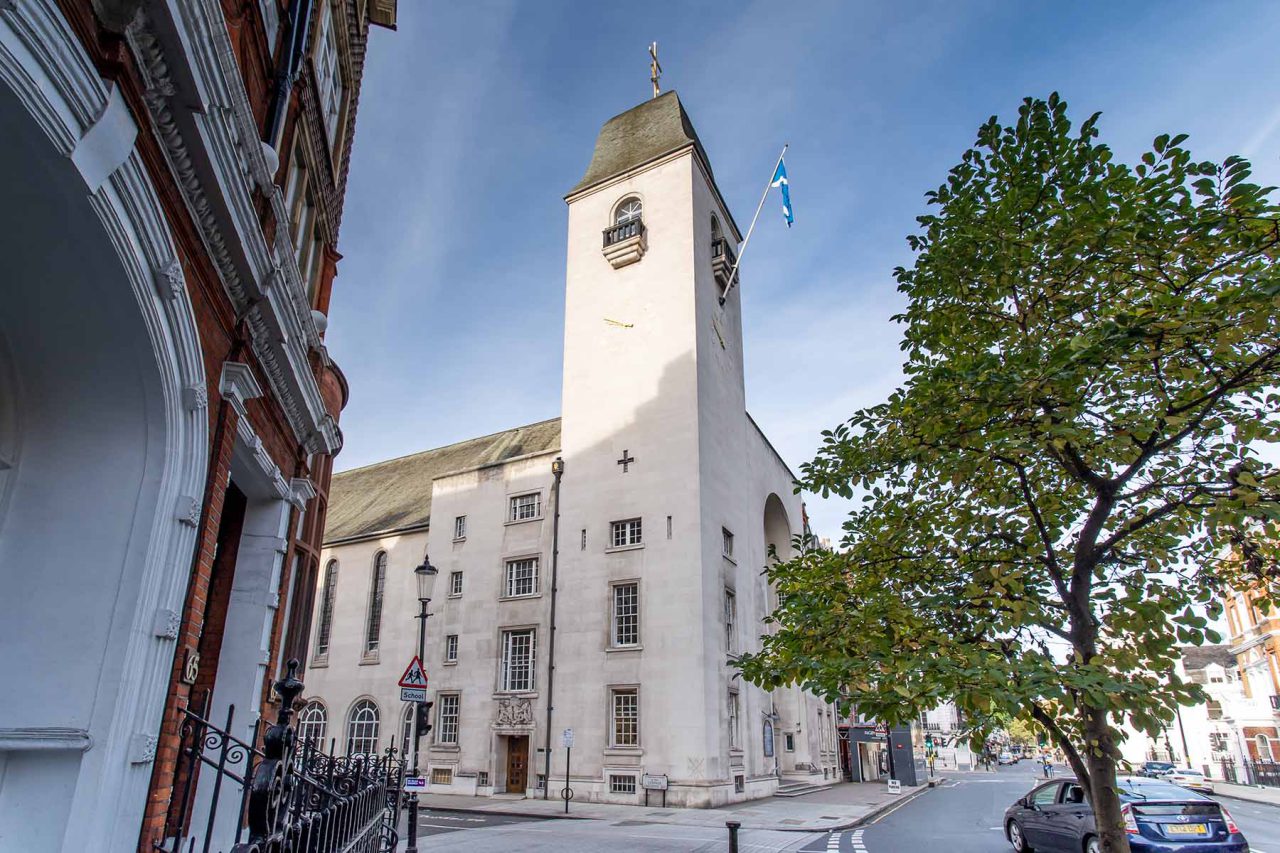

Sermon 6th September, 2026
FIFTEENTH SUNDAY AFTER PENTECOST
“The blood shall be a sign for you on the houses where you live:
when I see the blood, I will pass over you,
and no plague shall destroy you when I strike the land of Egypt” Exodus 12:13
Once, while travelling on the New York subway,
in a decade before the so-called clean-up of that city,
a memorable moment played out.
Having boarded the train and standing in the space between the doors,
I became aware of the gruesome sight of a small pool of blood in the central space.
Its source was a mystery – perhaps a prolific nosebleed –
or this being New York subway, something more sinister?
As stations came and went – doors opening and closing –
passengers boarding and disembarking –
there was the fleeting theatre of individual reactions
as fresh eyes beheld the spectacle.
Most of us, startled, nervous, then looking around,
a shy eye-brow raised in solidarity with other passengers – but nothing vocalised.
Eventually, a final stop. Doors opened.
A diminutive, ancient lady of the Big Apple, bags clasped about her,
advanced slowly into the train.
Taking in the scene – the scarlet pool;
then scanning our watching faces,
rendered further comment unnecessary, with:
“New Yoik .Don’t ya just luv’ it!”
Whether you are a newborn baby with half a pint of blood, or an adult with nearer nine pints, “… you are suffused with the stuff.”(The Body, Bill Bryson).
Each of us will know something about blood – professional, parental or part-time;
We may have given blood; we may have received blood.
It may make us queasy; it may make us well.
Fearful or grateful – blood is fundamental to our humanity –
it runs the same colour, whoever, wherever we are.
The current Church Magazine carries the article written by Revd William McLaren,
who attended St Paul’s Cathedral in May 2026
to commemorate and stand in solidarity with those
“Affected & Infected” by the Infected Blood Scandal,
the deadliest treatment disaster in the history of British state medicine.
(Between 1970 and 1991, more than 30,000 people in the UK
were infected with HIV, Hepatitis B, or Hepatitis C
through contaminated blood products and transfusions administered by the NHS.)
The St Paul’s Cathedral Service was a powerful, national moment
of recognition, remembrance, and reflection for the infected blood community:
During the service, petals fell from the famous Whispering Gallery inside the cathedral –
red for HIV, yellow for hepatitis, and black for death.
Rows of empty seats were left throughout St Paul’s
to represent the thousands of loved ones who died before seeing justice.
Attendees were given cards with the names of victims
to ensure their individual stories were spoken aloud and honoured.
As one participant remarked:
“We are joined forever by our blood line.”
“Like it or not, (it has been said) – the Bible is a bloody book.” Kyle Winkler
a crimson thread coursing through Scripture’s veins.
Often, blood shed as sacrifice – to cleanse, save and heal.
blood sprinkled on the altar – a means to restore relationship with God.
It is crucial to the Passover – the day of remembrance,
of which we read this morning; details of the when and how.
The sacrificial lamb/goat, set aside;
delivered to death at the gathering of community;
the careful instructions of how to prepare,
how to share and how to eat.
The assembling at night, the sense of hurry and imminent departure –
reflection of the risk and danger of the first Passover.
The Hebrews in captivity; their oppressors about to receive an appalling judgement –
the striking down of their first born.
While Passover, in time, becomes the great remembrance of liberation,
there is something about its originating circumstances,
that should make us quake.
Some lives are saved, but at the expense of others.
One tribe celebrates; one tribe mourns.
Blood, daubed on the lintel of one, ensures life;
blood, not daubed elsewhere, delivers ethnic cleansing.
Like the packages of blood one sees couriered by motorbike across London,
this is not a tale for casual handling.
Perhaps at the very least – if we let the Passover story address us –
we might conclude that “the deepest acts of faith take place
in the uncomfortable space
where joy and grief, liberation and loss, hope and horror
all occupy the same table.” (Timothy Adkins-Jones).
“Like it or not, the Bible is a bloody book.” Kyle Winkler
For those who know a little of Jesus and his family,
recognition that Passover was a story woven into their days –
born and raised by its telling,
pilgrims to Jerusalem for its remembrance.
Later, gathered for its meal on the night that Jesus was betrayed.
We, in turn, born and raised on the blood, sweat and tears,
that haunt the Passion/Easter story.
Behold the Lamb of God.
Calvary, the hill of the skull, a site of sacrifice.
Its enacting recalled,
each time we share the bread and wine.
The simple act undertaken by unnumbered millions
across the generations, around the world – proud cathedrals and quiet hospice rooms.
The small and precious reminder
that we learn and carry our faith in our bodies;
defined as much by what we do, as by what we believe.
This morning – the delight of witnessing the sacrament of baptism –
Luke Robert Farwell;
communion in chapel to follow,
the precious rituals that bridge the life of our bodies
to the stories that animate our hearts.
Sacred rituals – water, bread and wine –
so commonplace, so utterly uncommon;
A remembrance throughout the generations –
when two or three are gathered together –
joined forever by our blood line.
Sermon 27th September, 2026
A man had two sons; he went to the first and said,
“Son, go and work in the vineyard today.” He answered, ‘I will not,’
but later he changed his mind and went.” Matthew 21
“I am dreading going to see him.”
Recent words from someone anticipating visiting an elderly relation in hospital;
that relation nearing the end of life.
“Do you have a particular connection?”
“Well yes actually – I always used to buy him his lottery ticket.
I was wondering about taking one into the hospital.”
“I think that sounds perfect. You won’t have to say much else.”
In 1981 early punk rock band, The Clash famously, posed the question:
“Should I stay or should I go?”
Today Jesus spins a parable about a Dad with two lads –
the No/Yes guy and his Yes/No sibling.
It is the Monday of what we refer to as Holy Week.
The day before – Palm Sunday – Jesus has entered Jerusalem,
mounted on the donkey/colt of prophecy. Behold your King comes.
For the moment, adored by the crowds.
Entering the Temple, he has caused pandemonium,
overturning the money-changers tables –
incensed at the institutionalised machinery
that exploits access to his Father’s house of prayer.
The next day, early in the morning,
returning to the city after a night’s rest, on the road he is hungry.
He spots a fig tree by the road, but upon inspection finds nothing but leaves.
“May you never bear fruit again!”
Immediately the tree withers. Signs and warnings.
Understandably, the religious establishment is not chuffed.
This is where we joined the gospel this morning.
Just who does he think he is?
“By what authority are you doing these things, and who gave you this authority?”
A rhetorical joust commences:
“I will answer that, if you will answer one question for me.
Did the baptism of John come from heaven, or was it of human origin?”
The temple men know that if they admit that John the Baptist was a prophet sent by God, Jesus will ask them why they rejected John’s teaching,
refused his invitation to repent and receive baptism.
At the same time, they know that if they say John
was nothing more than a self-deluded charlatan,
the crowds — who love John — will turn on them.
So, after a pause: “We do not know.”
(Off the record, they thought they knew exactly what the answer was.)
“Neither will I tell you by what authority I am doing these things.”
There could have been a parting of the ways, then and there –
but it is Jesuse who keeps the conversation running:
“What do you think? A man had two sons; he went to the first and said,
‘Son, go and work in the vineyard today.’
Son No 1 answers: “Yeah, I don’t think so.”
but later, changes his mind, goes and sets to work in his father’s vineyard.
The father approaches the second son in similar fashion.
‘Son, go and work in the vineyard today.’
“Absolutely, no worries, happy to help, I’ll be with you in a moment…”
I understand his old man is still waiting……
“Which of the two did the will of his father?”
It’s a no-brainer. “The first” we all chorus – temple priest and C21st disciple.
Then just as we arrive at consensus, the sting in the “tale”.
This is not some disembodied platitude about reluctant teenagers –
a primary school fable designed to make us polite citizens.
It is part of a sustained blast – a series of parables in this chapter of Matthew –
that will throw a searchlight on the short comings of those who should know better.
“Truly I tell you, the tax collectors and the prostitutes
are going into the kingdom of God ahead of you.
For John came to you in the way of righteousness and you did not believe him,
but the tax collectors and the prostitutes believed him;
and even after you saw it, you did not change your minds and believe him.”
“Beware religiously correct – you are like the second son in the story.
Talking the talk, fluent in worthy words,
but when John came and offered you the good news of the kingdom,
did you repent, did you act?
Meanwhile, the people whom you shame and condemn –
the tax collectors and the prostitutes?
They – they are the first sons and daughters in the story.
Offered the gift of repentance (that change in direction, turnaround)
and salvation (which means health), they responded.
They weren’t pious, they just understood they were broken;
humble enough, desperate enough, to swim towards the life raft.
Starving, they could see they were being offered the bread of life.
Many of you will be aware of the long-standing and consistent presence
of support groups meeting regularly throughout the week, at St Columba’s.
Alcoholics Anonymous, Narcotics Anonymous, AL Anon –
those living with an alcoholic partner or family member.
Without fanfare for decades in this place,
and of course across this city and internationally
such groups meet to offer mutual support.
AA’s foundational twelve steps begins:
We admitted we were powerless over alcohol — that our lives had become unmanageable.
Came to believe that a Power greater than ourselves could restore us to sanity.
Made a decision to turn our will and our lives over to the care of God, as we understood Him.
If asked, I suggest that AA, and the like, are part of the DNA of this building.
“Pont Street” as it is known, has an international reputation,
so that those passing through London seeking a meeting, will regularly find their way here.
Participants speak movingly of how they feel about our building –
“These are the rooms where I began to get well.”
The testimonies of support group members witness to the long haul.
They try as best they are able to live out the mantra of one day at a time.
That they are travellers on the long road –
maybe has something to say to we who try to travel the path of Christian faith.
A recognition that it is never about a single moment –
significant as moments may be –
it is about the constant/consistent reorientating of our lives towards God.
The checking of our compass, to ensure its pointing to the figure of Christ,
our navigating north star.
As the Philippians were encouraged: To have the mind of Christ.
Where necessary, as with the parable son –
to change our minds, if circumstance or conscience asks that of us;
to change our minds, when new truth, possibility or hope reveal itself.
Open to the understanding that our faith is not locked in the archives of the past;
that the Spirt of God moves among us;
God continues to create and we are asked to be co-creators,
bringing the powers of imagination, creativity and humanity
to lives of prayer and service.
A father had two offspring – the No/Yes son and the Yes/No sibling.
Which are we?
In honesty, probably both.
Sometimes living out the words of faith;
sometimes not, looking away, walking by.
But as with AA, when there is a slip, the road back is not closed.
There is always a welcome – infact the return after a slip is often singled out for especial affirmation.
So too the invitation to return to God, whatever our failures of the faith.
A welcome most clearly shown in the meal before us,
To be shared in sanctuary and hopefully in watching homes.
Bread broken and shared – wine poured out;
actions more eloquent than words.
Reminder of the Christ who did not regard equality with God
as something to be grasped, but emptied himself,
taking the form of a slave, assuming human likeness.
… humbling himself, obedient to the point of death – even death on a cross.
Re-enactment of love’s greatest gesture.
Memorial of ultimate integrity.
Provision for the road ahead.
Lottery ticket for the dying man –
all of us.