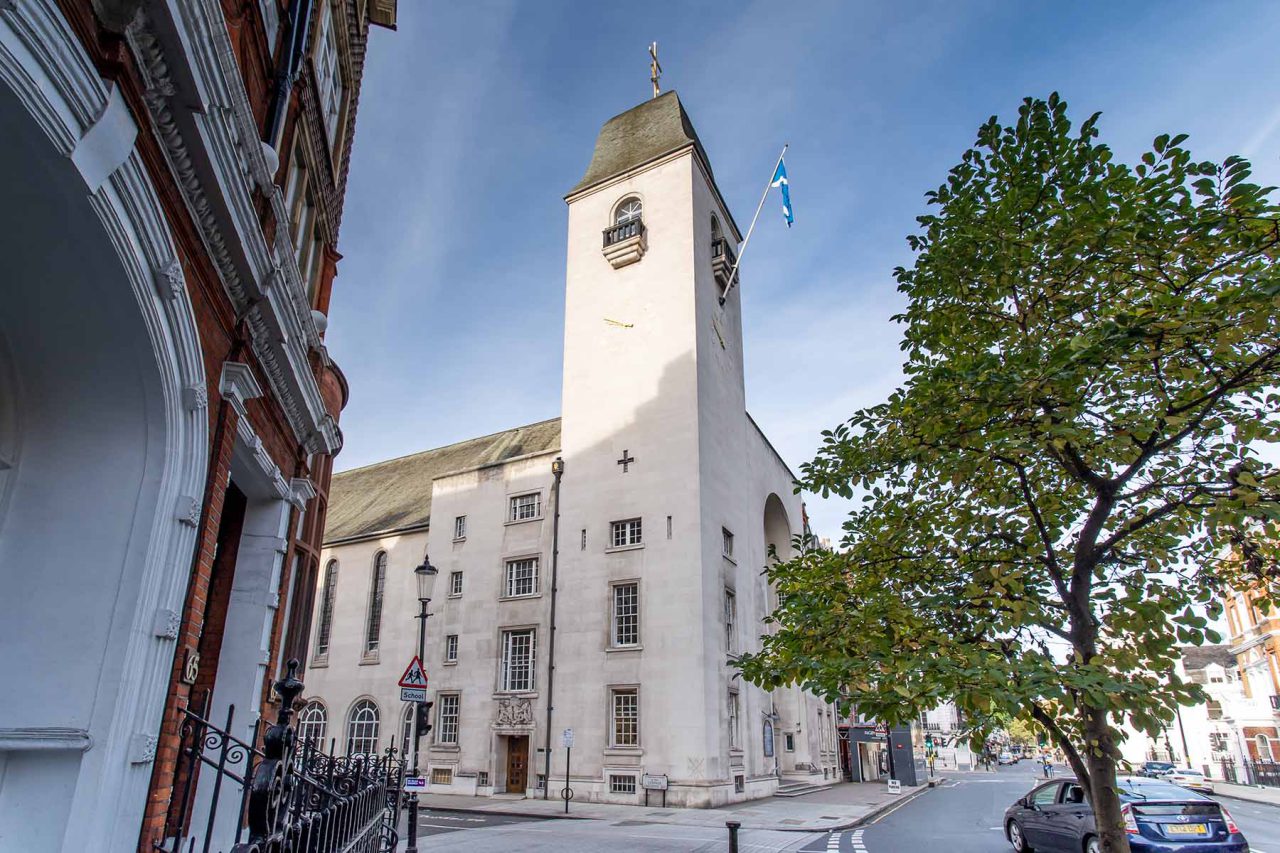

Sermon 3rd August 2025
Sermon 10th August 2025
Sermon 17th August 2025
Is not my word like fire, says the Lord,
and like a hammer that breaks a rock in pieces? Jeremiah 23:29
‘I came to bring fire to the earth, and how I wish it were already kindled!
… Do you think that I have come to bring peace to the earth?
No, I tell you, but rather division! Luke 12:56, 57
Two fiery-sounding, fierce biblical verses to disturb our sabbath calm.
Dramatic, disruptive – divisive?
But first, an encounter earlier this week.
“Are you Anglican?”
“I’m sorry.”
“Are you Anglican?”
The somewhat unexpected question put to me
as I paid for my lunchtime, supermarket sandwich.
A young man, bearded, clutching in one hand a string of wooden beads – a rosary perhaps.
“Are you Anglican?”
Slightly primly I replied. “No, I’m Presbyterian” –
not at all sure where this was leading.
“I hope you become a catholic.”
Slightly stunned by this, I eventually said:
“I like to think we are all catholic – just not necessarily Roman Catholic.”
(In my mind, words of our baptismal service:
We receive and welcome this child as member
of the one, holy, catholic and apostolic Church:
The young man considered this.)
“I hope you become a catholic.”
Anglican, Orthodox, Baptist, Kirk or Roman Catholic:
Two Sundays ago, I worshipped in a Church of Scotland on the Isle of Skye.
Last Sunday in a “high” Anglican parish.
One offered large screens saying Welcome and no pews;
the other housed statues of Mary and stations of the Cross.
In one a tattooed, former addict gave testimony about coming to the Lord,
in the other the priest doused the altar with incense before we received communion.
Planets apart?
Proof pure and simple of the division Jesus promised?
Or source for amazement – made curious at the breadth of expression,
the authenticity and variety of response,
to that single, haunting life?
“Do you think I came to bring peace on earth? No, I tell you, but division.
From now on five in one household will be divided,
three against two and two against three; they will be divided:
father against son and son against father,
mother against daughter and daughter against mother,
mother-in-law against her daughter-in-law
and daughter-in-law against mother-in-law.”
Harsh sounding predictions; but hardly a surprise.
Recall the infant Jesus carried to the Temple –
old Simeon declaring this child would be “a sign of contradiction,”
piercing even his own mother’s heart.
As an adult, Jesus was rejected by his home town of Nazareth – almost lynched.
A Samaritan village wouldn’t even let him enter their town.
Detractors called him demon-possessed and “raving mad.”
The religious elite “opposed him fiercely.”
Disciples quit, denied or betrayed.
And finally, execution by foreign imperialists,
who could not risk his sustained, subversive popularity.
Both in life and death, Jesus was a divisive figure,
attracting as much anger as delight.
Paul, who would stand on both sides of that fence,
would summarise Jesus as
“… stumbling block to Jews and foolishness to Gentiles.”
“Do you think I came to bring peace on earth? No, I tell you, but division.”
This is Jesus in the tradition/the musical key of the prophets –
Jeremiah – contrasting the straw of the false prophets
who promise peace, but ignore injustice,
with the wheat of those who speak God’s word faithfully:
“Is not my word like fire, says the Lord,
and like a hammer that breaks a rock in pieces?” Jeremiah 23:29
Jesus’ uncomfortable, urgent words
issue from uncomfortable, urgent circumstances,
marching towards High Noon – Jerusalem’s final show down.
Well aware of forces, religious and political, gathering against him, time running out:
“I have a baptism with which to be baptized,
and what stress I am under until it is completed!”
That baptism is surely his own death.
So, now Jesus warns his followers – once more –
that speaking truth to power, that discipleship,
keeping the footsteps of Christ – comes at a cost.
The risks of putting one’s head above the parapet;
the what may happen if we pursue the imperatives of God.
A reminder that when/if we stand for something important,
not everyone is going to stand with us.
Amnesty International are currently drawing attention to 2024,
as the deadliest year for journalists ever recorded.
They advocate for the protection of journalists who uncover facts,
investigate abuses and speak truth to power.
“Press jackets used to offer protection, but today, they make you a target.”
Christina Lamb OBE, chief foreign correspondent, The Sunday Times.
So, Amnesty International channel the spirit of original words from Pastor Martin Niemöller:
“First they came for the journalists and I did not speak out,
because they said it was fake news;
then they came for the protestors, and I did not speak out,
because at least the disruption stopped;
then they came for our laws, and I did not speak out,
because I thought that could not happen here;
then they came for the truth and I did not speak out,
because I didn’t know what the truth was anymore.”
Peace or division?
It’s not Jesus’s desire or purpose
to set fathers against sons, or mothers against daughters.
Not conflict, for conflict’s sake.
But, in the tradition of the prophets he will disrupt the uneasy calm
that masks denial, dishonesty, or harmful accommodation;
prepared to name realities we’d rather not;
not because he wants us to suffer,
but because real peace is worth fighting for.
That finds echo in the passage from the Letter to the Hebrews read this morning:
First, the great litany of the heroic figures that inhabit Faith’s Hall of Fame:
but then, the insults and injuries that may befall the faithful.
Mockery, persecution, imprisonment, torture;
Forced to wander in the deserts and mountains,
inhabiting caves and holes in the ground –
of whom the world was not worthy. (Hebrews 11, various.)]
As people of faith, or people considering faith –
this is the race, we are called to persevere in.
Hard, wearisome and divisive, as it sometimes may seem.
But it comes with the reminding promise – the promising reminder –
“Since we are surrounded.”
We do not do this alone.
We are accompanied/inspired by all those who have gone before us,
in the sprawling, global, complex, compromised, glorious history of faith.
Persevere, because we are not alone.
“Consider him (pioneer and perfecter of our faith)
who endured such hostility against himself from sinners,
so that you may not grow weary or lose heart.” Hebrews 12:3
In the week of the 80th Anniversary of VJ Day –
eighty years since the end of World War II.
I finish with a voice from that time and conflict.
A voice from the cloud of witnesses.
Ted Baker had two children – Pat and Peter.
Pat was only three when her dad left home with uniform and kitbag
to serve in the Second World War.
He had been in the forces for only ten months when he was killed in action.
It was a whole year before his death was confirmed.
Shortly before he left home, Ted wrote three letters –
one each to his daughter, his son and his wife
to be opened ‘in the event of my death’.
Although Pat was five when news of her dad’s death was confirmed,
she didn’t receive the letter until she was fourteen
when her mum thought her old enough to read it.
‘My Darling little Pat – I have been thinking things over while waiting for my boat,
and as I might not return,
I think it is only right that you should have a letter from me
which you can keep, to remember me by …’ he wrote.
The letter is full of little pieces of advice,
‘Don’t be selfish … Try not to talk about people …
Be a sport … Be a pal to your mother …’
Woven through the whole letter are little declarations of the father’s love.
‘Remember me as your dad and pal who worshipped the ground you walked on.’
The letter had a profound effect on Pat.
‘I used to read it a lot when I was worried or upset about something.’ she said.
‘It makes me feel my father’s looking over me and keeping an eye on me.’
Its influence never waned throughout her life.
‘It has made me think about my life and how I live it.’ she said.
‘It makes you stop and think about how you treat other people …
I can’t remember anything else he ever said to me.
That letter filled that void.’
The minister who brought this story to my attention
(Revd David Donald Scott, Blog on the Learig, August 2025)
reflected how, despite the absence created by his sacrificial death,
the words of a father’s letter have inhabited his child’s life
with a sense of his presence.
“This is like Jesus”.
Absence, filled with a living Word
and a uniting love that endures forever.
Sermon 24th August 2025
Sermon 31th August 2025
“On one occasion when Jesus was going to the house of a leader of the Pharisees
to eat a meal on the sabbath, they were watching him closely.” Luke 14:1
What were the rules you were taught growing up round table manners?
Were particular commandments drilled into you?
Have you in turn attempted to pass on certain parameters –
the do’s and don’t of communal eating.
Don’t start eating until everyone is served.
No pudding until you finish your main.
Finish everything on your plate.
Don’t stretch to reach the mashed potato.
In event of shortage, if guests present, family hold back.
Or that contemporary 11th Commandment: No screens at table.
Debie Thomas is an American writer/theologian; her family came to the USA from India.
She tells the story of her father, aged four,
growing up in her grandparents’ home in rural India
The grandparents were devoted members of their church;
it was often the case that elders and preachers spontaneously showed up
at their home for lunch after Sunday service.
Food wasn’t always plentiful
and cooking rice and curry over a wood stove took time.
Because the rules of hospitality dictated that “men of God” eat first,
Thomas’ father and his siblings had to wait a while to eat on Sundays.
Only when the honoured guests had had their fill and left
would the mother gather the leftovers and feed the kids.
One memorable occasion Thomas’ father, as a child,
lost patience with the unsatisfactory arrangement.
One Sunday afternoon, feeling especially hungry,
and already chased out of the kitchen on multiple occasions,
he “lost it”.
Marching into the dining room where the guests were relishing their second helpings,
the diminutive figure stuck his hands to his hips and yelled,
“Get out! Hurry up and leave so I can eat!”
Debie Thomas reflecting on this vignette of family folklore:
“I think Jesus would have relished this story,
because he wasn’t known for his politeness around food, either.”
“On one occasion Jesus went to the house of a leader of the Pharisees
to eat a meal on the sabbath, and they were watching him closely.”
Luke 14:1
Scripture takes food pretty seriously.
Eating is just about always, about more than nutrition.
We cannot live without bread, for sure – but we do not live by bread alone.
Food and its consuming are potentially deeply entwined with our spiritual lives.
The children of Israel celebrated their liberation from the slavery with a Passover meal.
Many of their religious laws concerned the preparation, eating and sharing of food.
In Luke’s gospel, food regularly frames moments of significant encounter –
a meal in the home of a despised tax gatherer (Levi, Chapter 5);
among the respectable religious leaders (Simon the Pharisee, Chapter 7);
in the fields along the road (plucking the heads of grain);
on a hillside with many, in an upper room with a few;
in a village called Emmaus.
Stories too – about farming and harvest,
about the poor begging crumbs from the rich,
about homecoming parties and fatted calves.
And in today’s reading, encounter at the table of a leader of the Pharisees;
where Jesus’ fellow guests were watching him closely –
suggesting the invitation bore the whiff of a trap being set.
The occasion gets off to a memorable start with Jesus healing on the sabbath.,
demonstrating that for him, relationship wins over regulation.
Restoration to health trumps religious rectitude.
Wouldn’t you relieve the suffering of one of your animals on the Sabbath,
if that was required?
Silence.
Gathering for food now becomes moment of illumination,
revealing attitudes and identities.
Jesus observes.
Two things catch his eye – seating plans and guest lists.
Perhaps words from Proverbs came to mind:
“Do not put yourself forward in the king’s presence
or stand in the place of the great;
for it is better to be told, ‘Come up here’,
than to be put lower in the presence of a noble.” Proverbs 25:6-7
Jesus witnesses exactly that sort of jockeying for position.
Guests clamouring for the seats of conspicuous stature –
top table prestige, status recognition.
(There is probably a bit of that in all of us.)
Jesus issues the warning.
Save yourself the embarrassment.
If you are modest in your claiming of seats
it may be that your host will honour you publicly
by inviting you to come up higher.
Promotion, preferable to relegation.
At another level, Jesus is illustrating deeper realities.
For Jesus’ listeners the wedding feast – the setting of his parable –
was a metaphor for the kingdom of God,
with its invitations, joy and abundance.
And if it is really the kingdom of God that Jesus is describing;
Best to remember:
At that banquet, God is host – the seating plan, God’s alone.
As guests, an attitude of gratitude;
not comparison and superiority.
Just as seating plans, real or imagined,
tell us something about inner lives,
so too our guest lists.
Hence, Jesus’ second piece of observation and advice.
When drawing up the guest list, remember your own blessings.
Share them; don’t be strategic.
The kingdom of God is not Corporate Hospitality,
favours funded for future returns.
Jesus advocates an alternative business plan:
be extravagantly, forgetfully, uncalculatingly generous.
Invite the most unlikely, the most unexpected of guests –
the poor, the crippled, the lame and the blind –
And you will be blessed, because they cannot repay you,
for you will be repaid at the resurrection of the righteous.’
[Invite them into neighbourhood, home, club, church;]
Rowan Williams, former Archbishop of Canterbury, writing in the papers this weekend:
Draws attention to asylum seekers and hotel crowds –
That is currently playing out in our media.
Williams flags up how debate about migration is framed
as if it is a stand-off between ordinary people
and a consolidated mass of threatening, predatory, incomprehensible strangers –
typically the young, foreign (and usually minority ethnic) male.
So, he searches for common ground:
“No one in their right mind thinks accommodating asylum seekers in hotels is a good idea.
No one in their right mind thinks we should just live
with undocumented, life-threatening migration routes into the UK.
And no one in their right mind thinks the experiences endured by most migrants
could be a rational choice for anyone.
… begin from these shared acknowledgments.”
Not a new issue: “I have vivid memories of meetings more than 25 years ago
in the post-industrial town in south Wales where I then worked,
trying to broker discussion
between local groups from socially deprived areas
and various community and religious organisations,
in the wake of what came across as a casual announcement from the government
of a new initiative to settle significant numbers of asylum seekers in the town.
Anger and bewilderment, yes, and an element of real hostility –
but also a plaintive sense that yet again
local voices had been completely ignored in a way that was all too familiar.
But here’s the point of contact.
Williams principal point:
“But the truth is that the migrant, too, is an ordinary person.
Anyone who has spent time with refugees –
in Ukraine, in Syria, in Sudan, in Kent or Swansea –
knows the conversations that are likely to happen.
I never thought I could find myself here.
I only want to make sure my children are safe.
I miss my garden.
I don’t know where my parents are.
I don’t know how I can continue my education.”
“Do not neglect to show hospitality to strangers,
for by doing that some have entertained angels without knowing it.” Hebrews 13
As the poet, Mary Oliver writes,
“Keep some room in your heart for the unimaginable.”
“On one occasion when Jesus was going to the house of a leader of the Pharisees
to eat a meal on the sabbath, they were watching him closely.”
Jesus asks us to believe that table manners matter.
Where we sit and who we sit with
a witness about ourselves
and the kingdom of God.