
Sermon 4th May 2025
Sermon 11th May 2025
SUNDAY 11th MAY 2025 11.00 a.m.
MORNING WORSHIP, VE DAY 80th ANNIVERSARY
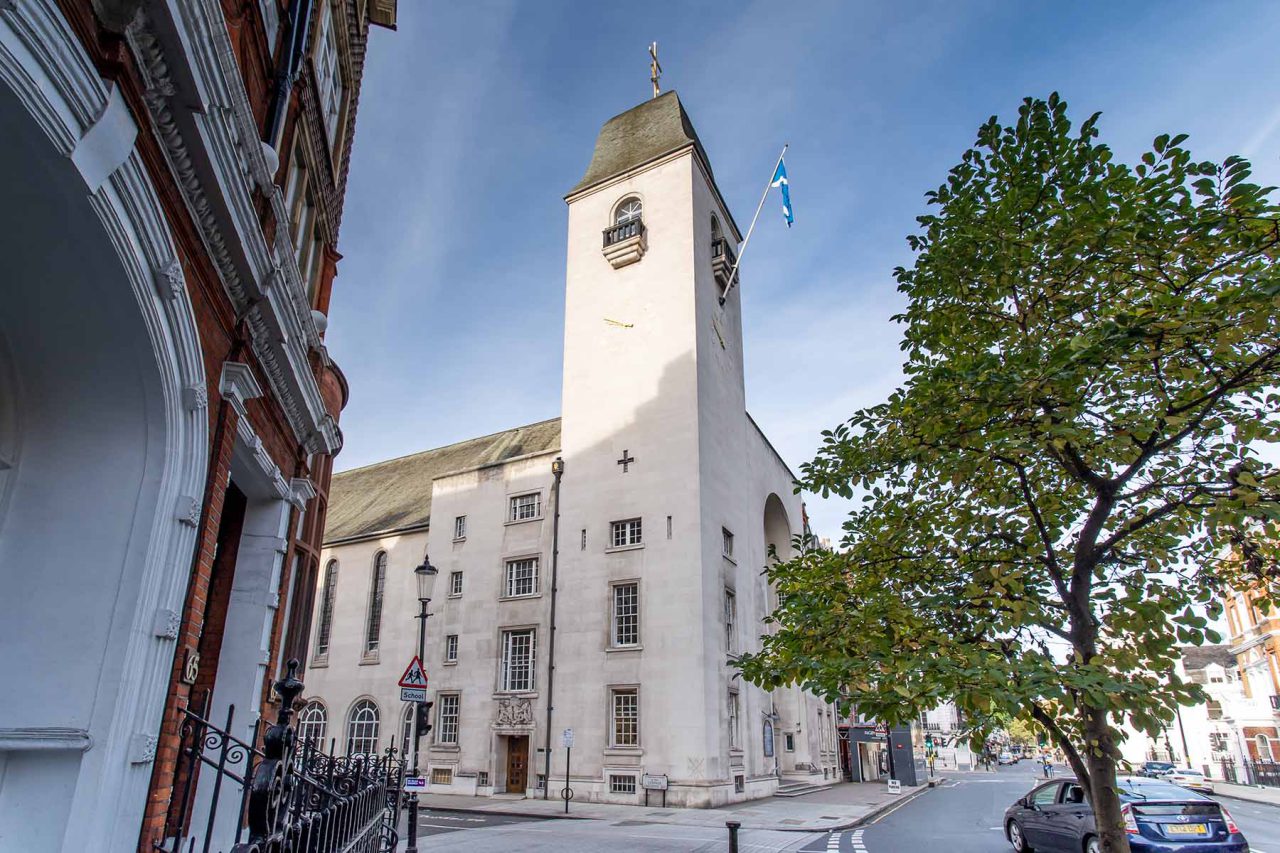
ST COLUMBA’S, PONT STREET
(FOURTH SUNDAY OF EASTER)
“Finally, beloved, whatever is true, whatever is honourable, whatever is just,
whatever is pure, whatever is pleasing, whatever is commendable,
if there is any excellence and if there is anything worthy of praise,
think about these things.” Philippians 4:8
From a collection of World War II verse, selected phrases from a poem entitled,
War Has become official, old friend, Geoffrey Matthews,
evoking the new landscape of a country at war in 1939.
“The searchlights lean their wigwam patterns
over a minster peeled of glass,
No tactless light breaks through the muffled streets,
kind for the lovers, the County Council and the thief.
Today I am sick of sandbags, news, announcements,
and cycle in calm September sunshine
across the plain at Ampleforth
Sheffield and Hull, Bradford and Leeds
have billeted children in these chequered villages,
happy and pale they pull the unripe apples down,
and what a sin it is, I think,
to carry a gas mask through cornfields like these.”
Six years later, the jubilant scenes of VE Day – crowds in London,
Dancing in the fountains – relief and joy.
On Tuesday, when Scots in London hosted an evening of discussion
about the significance of VE Day – then and now –
what emerged was the variety of experience, on May 8th, 1945.
Yes, there were the jubilant throngs in London,
but there were other smaller episodes, eloquent of humanity.
A member of the RAF (writing for Mass Observation):
Serving on a base near Luton:
On the evening of 7th May I was in the local village church
with a young chap
who had promised to show me the basic ideas of playing the organ –
a thing I’ve always wanted to do.
We were still there at 10:00pm when a very elderly and decrepit lady
inquired if she might lock the church.
She said that the news had come through of complete German surrender.
My friend said just a minute, and went back to the keyboard to play,
“Praise God from whom all blessings flow.”
Then we switched off the bellows, turned off the lights
and went down to the village
where people were singing and dancing outside the pub,
while others were decorating the houses with flags and streamers.
When the pub closed the people seemed to melt away.
We went to a transport cafe and ate fish and chips.
When we got back to camp, we found a great deal of excitement
as we were to close down from midnight until 8:00am Thursday.
Passes were arranged for all who could possibly get home,
and it was arranged to run transport from Luton at 4:30am,
which would serve those waiting for the first trains
both for London and the north.
(p188 The People’s Victory).
A stark contrast from the front,
is the recollection of member of our linked congregation, St Andrew’s, Newcastle.
Ian Gillespie – Normandy veteran and recently celebrating his 105th birthday in style,
records in the Scots in London 80th Anniversary publication.
“That day I happened to be the company Orderly Officer.
The main duties were company admin and security, involving setting the guard.
Uniquely, I was also guarding a captain in the Pioneer Corps who had shot his major
and was on a murder charge.
Everyone in the company was given a bottle of champagne to celebrate.
So you can imagine me guarding this captain,
both of us drinking the champagne;
I with my revolver at the ready, and he on a murder charge – a macabre scene.
He was shipped back to the UK for his court martial.
I don’t know the sentence.
Today he would have been treated medically for post-traumatic stress disorder.”
Ian has always kept a diary and when he opened the page for VE Day
he found the label from the champagne bottle,
Moet et Chandon, Epernay, France, Brut, 1937.
A friend advised him he shouldn’t have drunk the champagne –
today it would be worth £1,000.
Sydney Jary, another Normandy veteran who ended the war in Germany observed –
“Reaction to the end of the war, like aggression, increased
the further behind the lines you went.
The natural aristocracy of the battlefield, the infantry,
having fired a feu de joie of Very lights,
curled up and slept.
We had learned too much to indulge in shallow demonstrations.”
(!8 Platoon, p122)
For many of course there was continuing anxiety for loved ones –
those still away, those missing, those who had been prisoners of war –
and of course those who were still fighting.
VE Day was the end of fighting in Europe,
it was very clearly not the end of the war.
At St Columba’s, as the account read earlier by Stuart Steele explained –
there was no church building, following its devastation in 1941.
Instead, thanks to neighbouring St Saviours,
the congregation gathered to give thanks –
in the same way that there were services across the nation.
(At Westminster Abbey there were services held every hour, throughout the day.)
At St Saviours, the minster, Revd Dr Scott began:
“Dearly beloved members of Saint Columba’s,
it was in God’s house that the tidings of war were made known to us
on Sunday, the 3rd September 1939.
Today, the 8th of May 1945, we meet again in God’s house,
to give thanks to Him for final victory
achieved in the European theatre of this worldwide struggle
against the forces of tyranny and oppression.
It is not the same house in which we meet,
but it is the same God whom we worship.
The enemy has taken from us a cherished building.
He has not taken from us our unshakeable belief
in the God of righteousness and peace
revealed to us in Jesus Christ, our Lord.”
From these voices speaking to us across the years, what will we glean?
Simply nostalgia – an outing for the historian, if you like that sort of thing?
As with the annual Remembrance Day services,
perhaps the 80th Anniversary of VE Day is primarily a chance simply to listen –
to hear and honour the voices of those who were there –
old and young, serving personnel and civilian.
To comprehend, if only a little, their experience.
As one veteran summed up:
“Just ordinary people called to do extraordinary things.”
But in this house of prayer – a wondrous gift that has grown from the ashes,
We might choose to search for more.
Christian, currently serving, read Psalm 23.
So often sung or read – a go-to for many, in demanding times, danger or sorrow.
It’s most remembered image, is God as shepherd.
But, it also describes God as faithful, trustworthy, generous host:
You prepare a table before me in the presence of my enemies;
you anoint my head with oil; my cup overflows.
This afternoon we will retell, largely in his own words,
the wartime story of the Very Revd Fraser McLuskey, chaplain to the SAS;
longtime, and much revered, minister of this congregation.
Parachuted behind enemy lines into central France in 1944,
he lived the nomadic, dangerous life of the unit he was serving with.
Of church services held in secret forest camps he wrote:
“… our worship seemed natural and meaningful.
We worshipped where we lived;
in the clearing where we slept, round the campfire which was home.
In the most obvious and concrete fashion
worship was a part of daily life
and not divorced in any way from it.
The ground on which we cooked and ate and slept,
the ground on which at any moment
we might find ourselves defending our possessions and our lives,
was the ground on which we worshipped.
Common ground was sacred ground.”
And of communion – the meal and sacrament at the heart of our faith –
which he often celebrated –
“…circumstances robbed our celebrations of much of the usual ceremony.
(But) we lost nothing by the smallness of our numbers
and the simplicity of the service.
We gained rather a new realisation of the character of this family act
instituted by Christ, with a handful of men
as ordinary and human as we were,
in a home where a family lived its life
and did its work.
That first celebration was simple and unpretentious enough,
and we had the same essentials,
bread and wine, a group of unworthy believers,
and the presence of the Master.”
“…, whatever is true, whatever is honourable, whatever is just,
whatever is pure, whatever is pleasing, whatever is commendable,
if there is any excellence and if there is anything worthy of praise,
think about these things.” Philippians 4:8
Sermon 18th May 2025
Sermon 25th May 2025
SUNDAY 25th MAY 2025 11.00 a.m.
MORNING WORSHIP,
ST COLUMBA’S, PONT STREET
(SIXTH SUNDAY OF EASTER)
“Then the angel showed me the river of the water of life, bright as crystal,
flowing from the throne of God and of the Lamb
through the middle of the street of the city.
On either side of the river is the tree of life with its twelve kinds of fruit,
producing its fruit each month;
and the leaves of the tree are for the healing of the nations.” Revelation 22
The Thames and the Tyne, the Tiber;
The Euphrates, the Danube, the Mississippi, the Amazon.
River names that evoke histories and imaginings, romantic or terrible.
Which is your favourite/special river – and why?
What stories would your river tell?
Some profound things might emerge, I’m sure.
But what if rivers voice something of themselves,
Not dependent upon the tales of the cities that have grown upon their banks?
The American poet, the late Mary Oliver wrote, “At the River Clarion”; it begins.
I don’t know who God is exactly.
But I’ll tell you this.
I was sitting in the river named Clarion, on a water splashed stone
and all afternoon I listened to the voices of the river talking.
And though “it’s difficult to hear anything anyway,
through all the traffic, the ambition.
[And] slowly, very slowly, it became clear to me what it [they were] was saying.
Said the river: I am part of holiness.
The poet goes onto muse about various mysteries in life,
but circles back to contemplate the river:
“I only know that the river kept singing.
It wasn’t a persuasion, it was all the river’s own constant joy
which was better by far than a lecture, which was comfortable, exciting, unforgettable.”
Music of water over stone, not a persuasion or lecture,
but a constant joy, based on fixed attention.
“Then the angel showed me the river of the water of life, bright as crystal,
To observe the vision of the new Jerusalem,
John is granted a high mountain –
the biblically well-proven vantage point, for thin places and holy things.
The new Jerusalem descends from the heavens.
Forged from pure gold, adorned with every jewel imaginable;
this culmination of a city, a pearl beyond price.
No temple in its midst.
The former focus for the faithful, no longer necessary,
for in this final version, God is present, dwelling with the people –
no need for a house set aside, to represent God –
God is there.
If more evidence is required:
No need for sun or moon – God provides/God will be the light perpetual.
The city gates, always open, a metropolis free from fear.
From the throne at its centre flows a river
and on its banks stands the tree of life
whose fruit is never out of season.
The inhabitants of this city will see the face of God
upending traditional understanding,
that no one can see God’s face and survive.
They will bear God’s name on their foreheads,
sealed for eternity by God’s protection.
At first glance the “new heaven and new earth” look narrowly Jewish —
with twelve gates, twelve guardian angels
representing the twelve tribes of Israel.
Actually, John’s heavenly Jerusalem is cosmopolitan;
its citizens drawn from “every nation, tribe, people, and language.”
The tree of life watered by the crystal river,
reminiscent of Eden’s tree of knowledge of good and evil,
is for the healing of the nations,
not the fall of humanity.
“Then the angel showed me the river of the water of life, bright as crystal,
If Revelation deals in poetry to set us hankering for its waters,
the prose of Acts keeps us grounded.
Where Revelation dreams broadly and ecstatically,
Acts reminds that God works in specifics – one encounter at a time –
face to face, in meeting places that appear on maps,
between individuals whose names become known.
On the sabbath day we went outside the gate by the river,
where we supposed there was a place of prayer;
and we sat down and spoke to the women who had gathered there.
Lydia was a Gentile businesswoman and “God-fearer” from the Greek city of Thyatira, famous for its reddish-purple dye.
On a business trip, 300 miles from home, in the Roman colony of Philippi.
A “purple seller” (porphyropolis) marketing a luxury product to the wealthy elite.
(In the parable of the Rich Man and Lazarus, for example,
the rich man was “dressed in purple, and lived in luxury every day.”)
Lydia was clearly a woman of means, agency and authority.
There are no men in this story – no husband, father, son, or brother.
Maybe she was divorced or widowed.
After her own conversion and baptism,
Lydia commandeers her entire household to be baptised,
meaning she employed servants, possibly family members.
When Lydia hosted Paul and his entourage
there was sufficient space to accommodate them.
And after the apostles were imprisoned,
and then released with strict orders to leave town,
they “returned to Lydia’s house”.
A brave decision on her part,
given that the apostles had been stripped, beaten, and jailed by a violent mob
because of their preaching about a strange sect that Lydia herself had joined.
She was effectively harbouring criminals.
Lydia’s decision appears to have had a domino effect.
Immediately following Lydia’s conversion in Philippi,
in Thessalonica “a few prominent women” believed (17:4).
At the next stop in Berea, “a number of prominent Greek women” converted (17:12).
And after Berea, Paul engaged the intellectual elites at the famous Areopagus in Athens, where many in the audience “sneered,”
but some believed, including a woman named Damaris (17:34).
Since this story is set in Paul’s first foray into what we now call Europe,
Lydia is honoured as the first Christian convert in Europe.
Her house was the first church in Europe,
the business woman-householder-convert-host its leader and patron.
“Then the angel showed me the river of the water of life, bright as crystal.”
Thames, Tyne, Tiber – Euphrates.
Mary Chapin Carpenter, American country singer begins her song “On and on it goes.”
“River starts with a drop of rain somewhere in this world.”
Earlier we sang: (CH4 707 Healing river of the Spirit )
Living stream that heals the nations, make us channels of your power.
All the world is torn by conflict; wars are raging at this hour.
We know this to be only too true.
Yet hours before his death, Jesus told his friends:
“Peace I leave with you; my peace I give to you.
I do not give to you as the world gives.
Do not let your hearts be troubled, and do not let them be afraid.”
Strangely, in these troubled times I have heard in recent days,
two separate appeals for monuments to peace.
From someone much involved with the recent 80th Anniversary VE Day commemorations.
“Why is there no national monument or plaque commemorating the moment,
where people can gather to remember?”
He followed that with a suggestion and an invitation:
“Now that most of the participants are gone,
it seems appropriate that the commemoration should be reshaped
to celebrate the 80 years of largely unbroken peace
that Europe has enjoyed since 1945.
Perhaps from now on it should be Peace in Europe Day?
My Italian and German friends much prefer this approach.
I am sure it is true of others and much more resonant with young people.
It seems logical that Christians should emphasise this theme in future.
That is why I led the Monte Cassino to Rome Peace Walk through Italy.
The walk was non-denominational:
we had Catholics, Anglicans, non-denominational people, a Jew and agnostics.
What mattered was celebrating peace. Scots on the walk in 2026?”
And this week, a second appeal for a monument to peace.
On Thursday, International Day of United Nations Peacekeepers.
at Whitehall’s Cenotaph, remembering amongst others,
sixty-five peacekeepers have died in the last twelve months.
“They chose to serve their country.
Their country chose them to serve the world, (to serve us.)
They died in a country with which their own had no dispute.
They are mourned by a mother, a father, a widow, by family, by friends.”
{Two hundred and eighty members of that large family
working for the UN Relief and Works Administration, UNRWA, in Gaza.
We mourn loss of their colleagues there, members of the Palestine Red Crescent Society.
“We look forward to the day when we in this country have a memorial
to those who have died in the cause of peace as do other nations;
a memorial that recognises the sacrifice of all peacekeepers
from wherever they came.”
The search for peace, the search for still waters,
unending as a river’s flow?
Mary Oliver’s River poem concludes:
Sometimes the river murmurs, sometimes it raves.
And still, pressed deep into my mind, the river
keeps coming, touching me, passing by on its
long journey, its pale, infallible voice
singing.
May we hear the music of the river of life, bright as crystal;
a song, of nations healed and humanity united.
Mindful that such a river starts with a drop of rain somewhere in this world.
Perhaps with us.